Saltmarsh hydrology
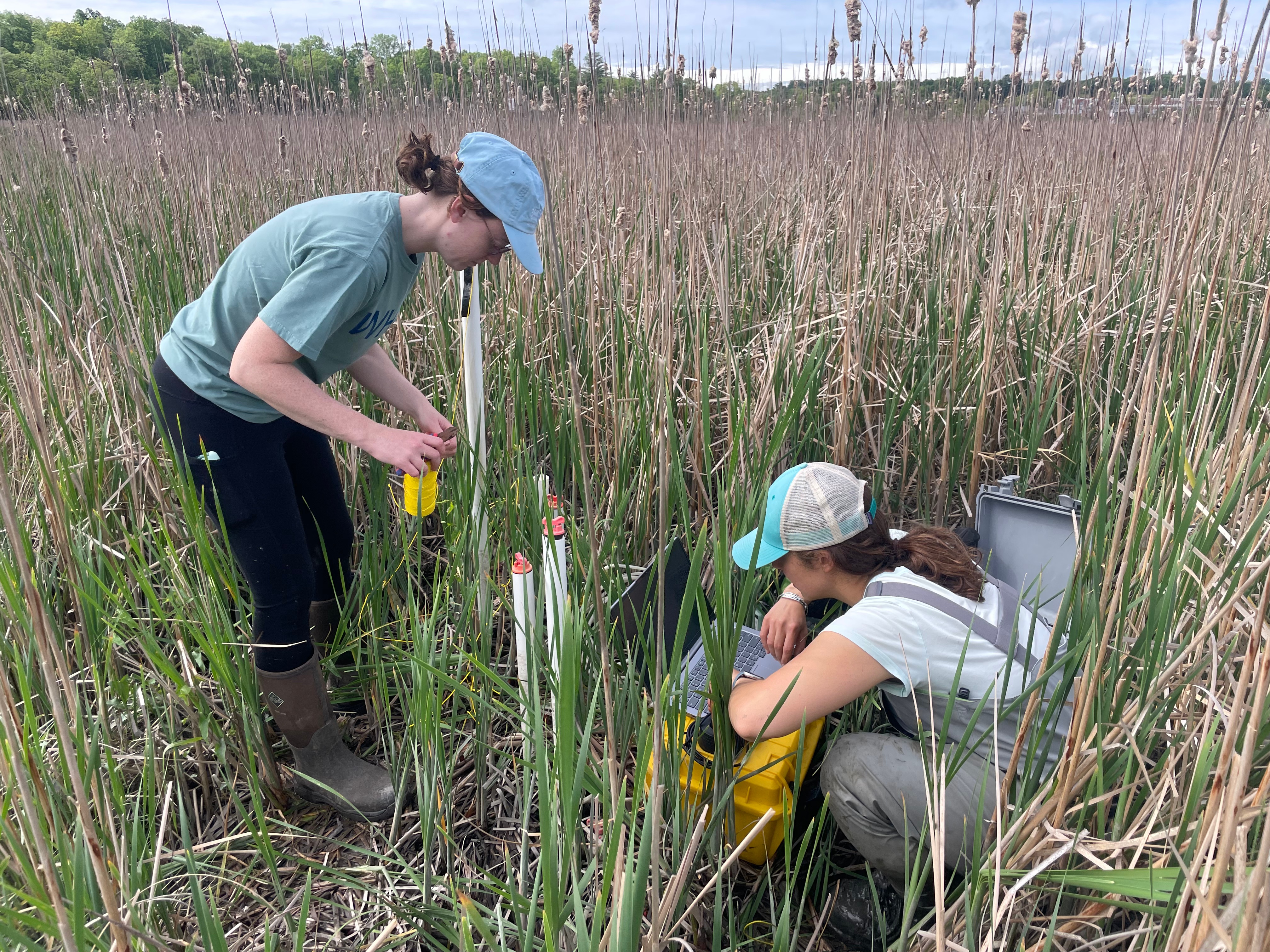
Coastal marshes lie at a dynamic interface between fresh groundwater and salty, ocean water flow paths. How water moves and mixes within marshes strongly affects their ability to store carbon and whether they can keep up with sea level rise. However, little is known about salt marsh hydrology in wintertime, particularly at intermediate latitudes where marshes may become frozen for prolonged or intermittent periods.
Our team across WHOI, USGS and Old Dominion University are collecting long-term records at several marshes along the New England coast – from Cape Cod, Massachusetts up to northern Maine. We are particularly interested in latitudinal and elevation gradients in freeze/thaw cycles, and how these affect groundwater flows and carbon export from marshes to the coastal ocean. This winter, we will also be chasing Nor’ Easters to evaluate whether these more extreme flooding and precipitation events have an oversized impact on groundwater transport.
Spurs and grooves
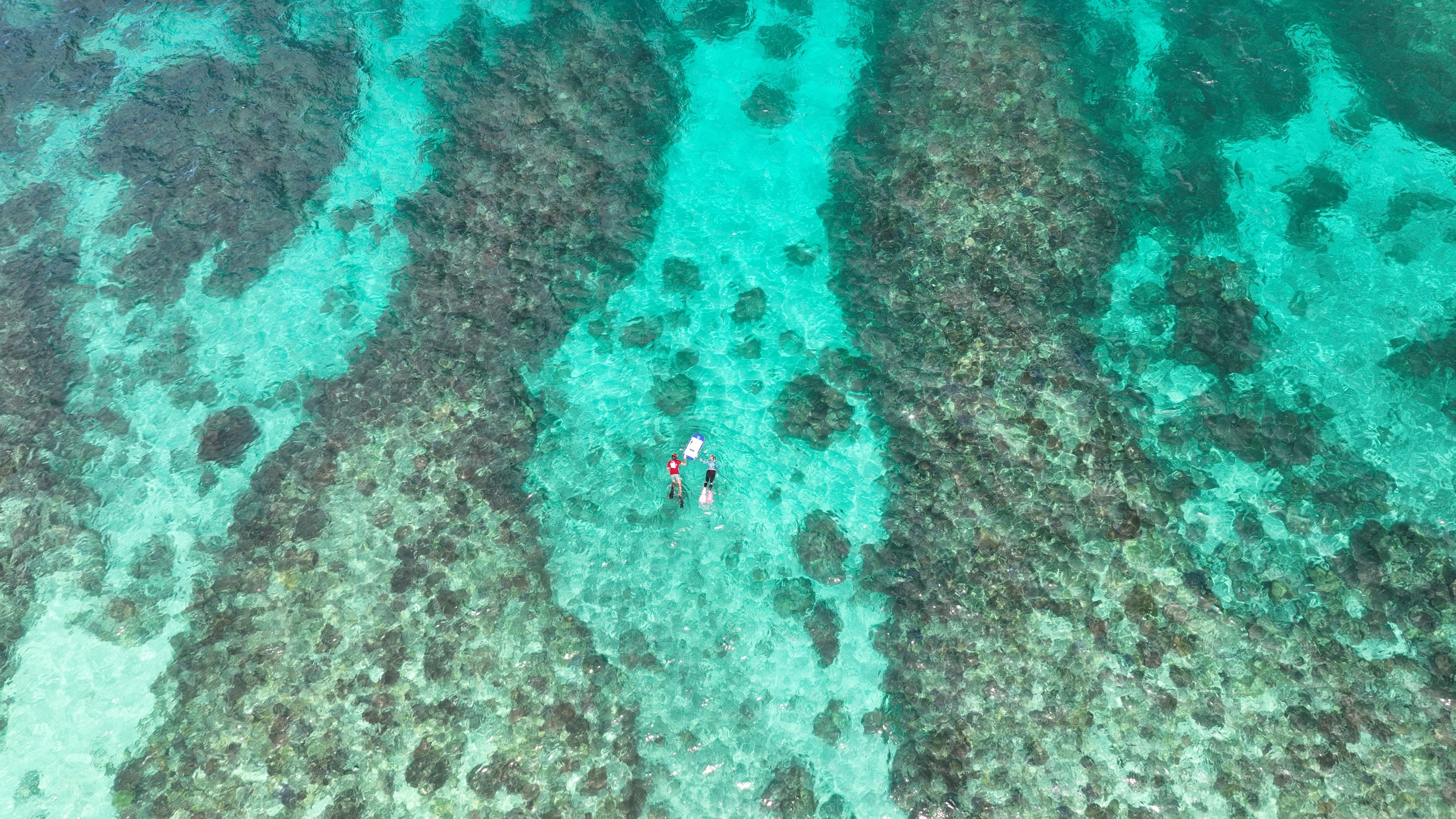
Spurs and grooves (SAGs) are patterns of shore-normal, coral-covered ridges and deeper, sandy channels that are found on reefs all over the world. Although SAGs have long been regarded as important “natural breakwaters,” helping to protect reefs and communities behind them from large waves, research on how they affect wave transformation and wave energy dissipation is limited. We deployed an array of instruments on spurs and grooves in Palau to measure waves, currents and turbulence across these features.
The results indicate that that the SAGs dissipated as much as 70% of incoming wave energy through bottom friction alone, over a distance of just 50 m. Elevated bottom stresses on the shallow, rough spurs are also expected to enhance sediment resuspension – keeping spur-top corals free from debris – and asymmetries in tidal currents help to transport sediment accumulated in the grooves offshore.
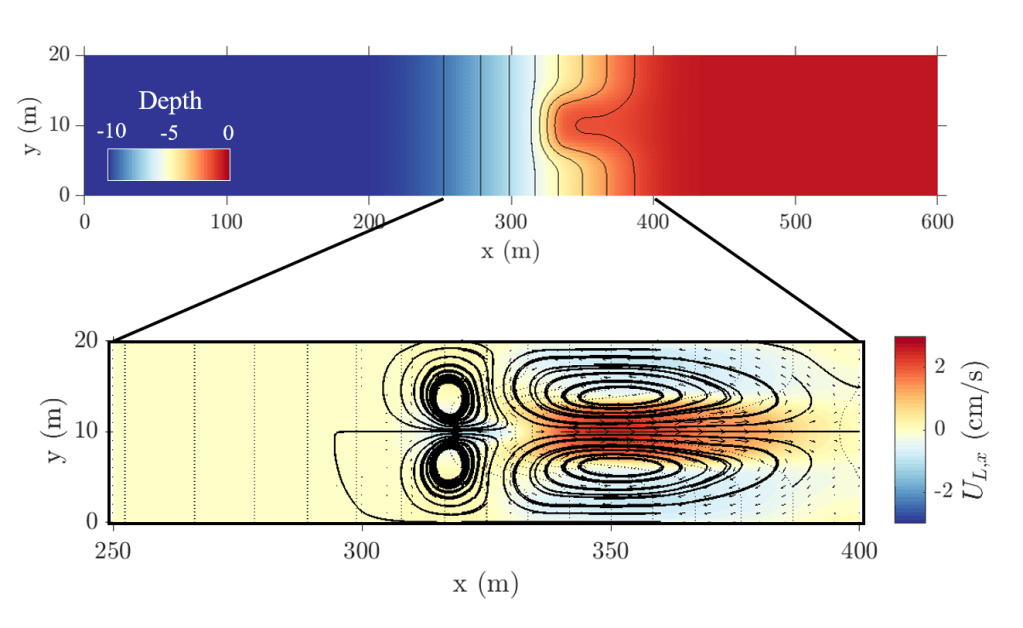
In combination with field measurements, we performed simulations using the phase-resolved model SWASH to explore how SAG morphology influences wave transformation and wave-induced circulation. The simulations showed that both refraction and diffraction can be important over spurs and grooves, and the balance between the two depends strongly on the ratio between the wavelength of the wave and the along-shore spur spacing. Wider SAGs generate greater refraction, concentrating wave energy on shallow spurs, while narrow SAGs generate more diffraction, which “diffuses” wave energy towards grooves and leads to more along-shore uniform wave properties.
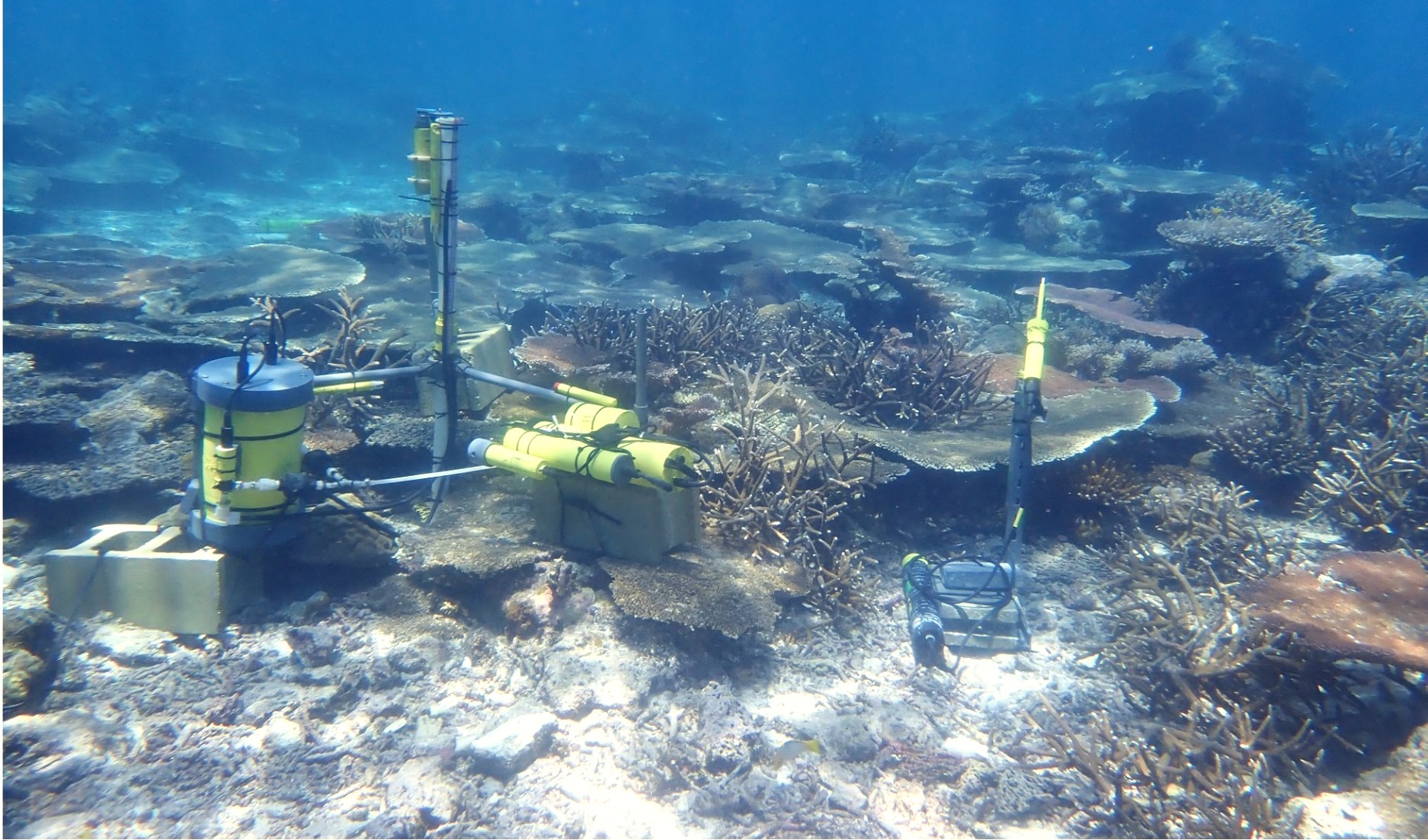
Ecosystem Metabolism
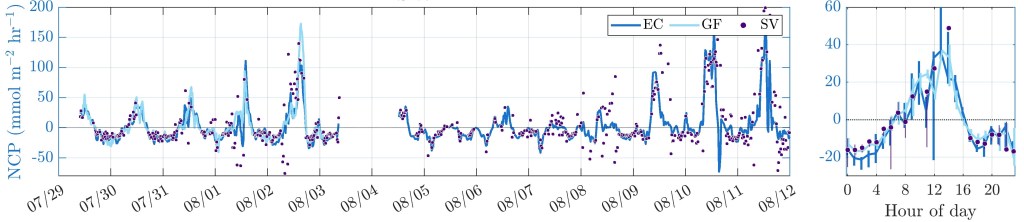
The exchange of oxygen, carbon, and other chemicals between corals (or other benthic vegetation) and the water column provides valuable information about ecosystem health, carbon sequestration, and biogeochemical cycling. We are working to improve non-invasive methods for measuring these fluxes in-situ, particularly in shallow coastal environments where boundary layer turbulence may be modified by waves and canopy “roughness.” We deployed instruments via scuba on a coral reef in Palau to quantify ecosystem production and calcification using several different methods (aquatic eddy covariance, gradient flux and scalar variance).